Advanced Engineering
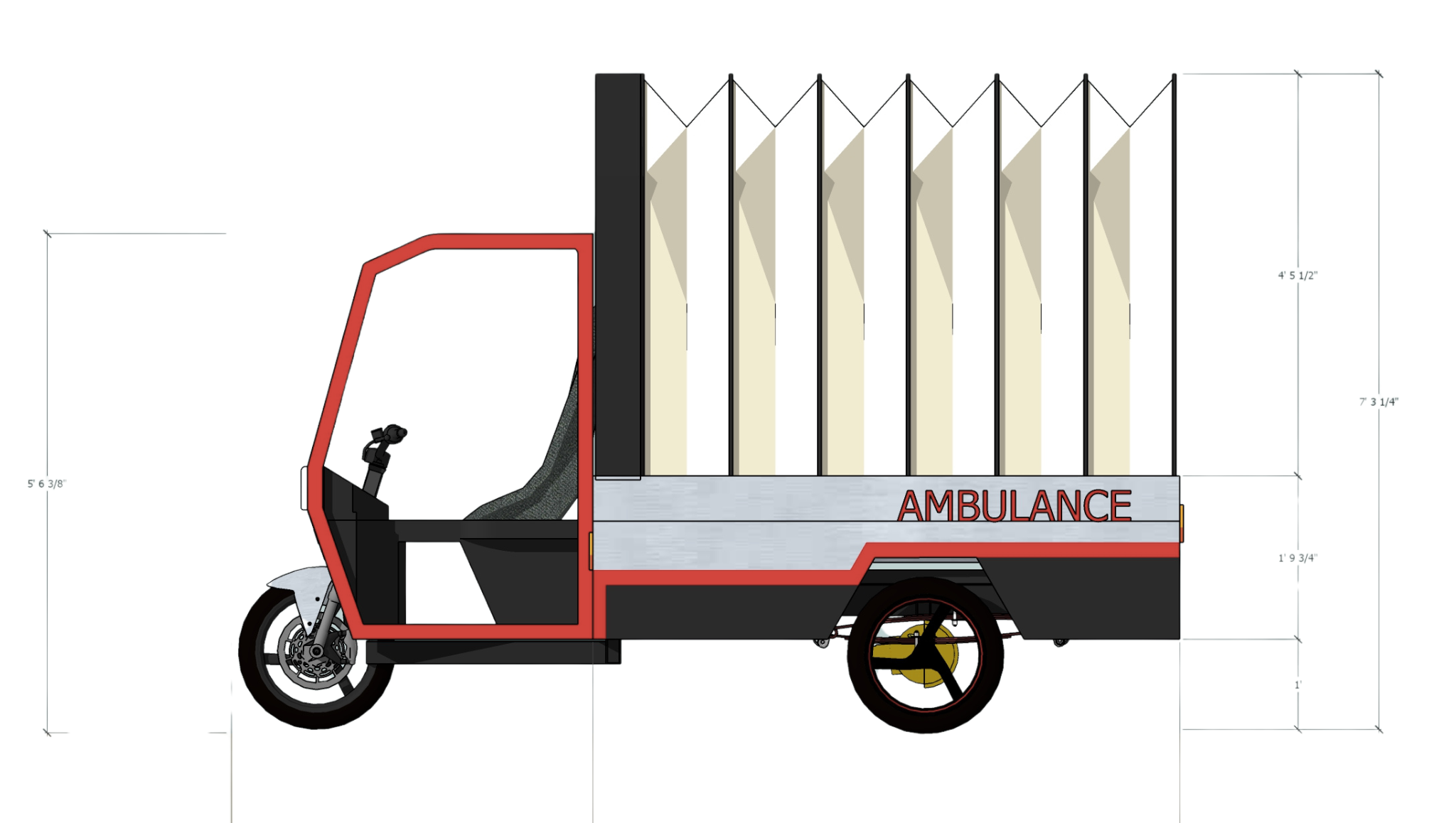
Witness the intricate mechanisms and 3D modeling behind the Trambulance.
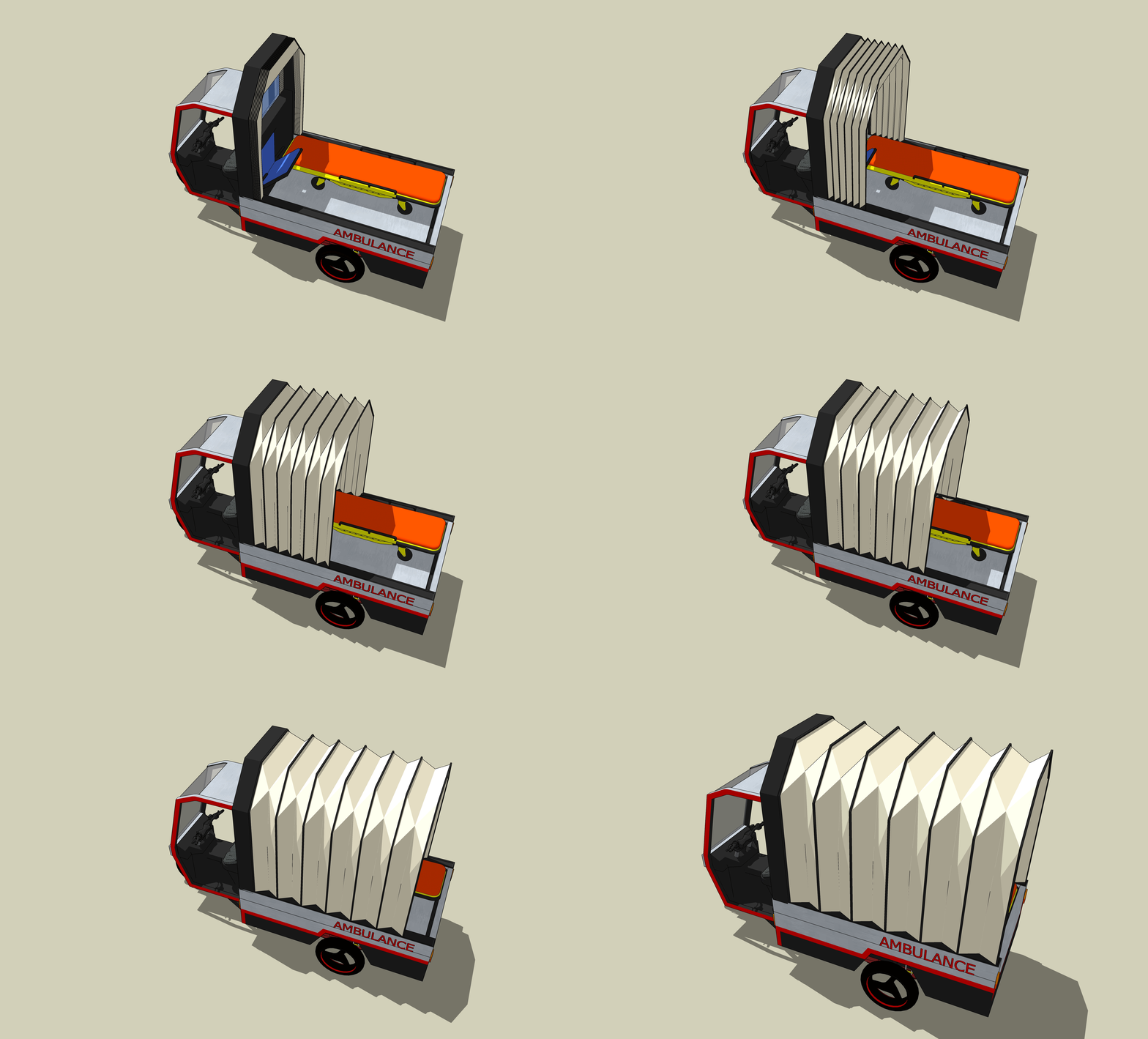
Smart Access Mechanism
An affordable, tri-wheeled, AI-powered electric ambulance designed to conquer the narrow alleys of Dhaka and the muddy roads of rural Bangladesh.
Awarded a $3,500 grant from First Flight Venture Center. Crowned National Champion & South Asia Runner-up at IMechE SOFE.
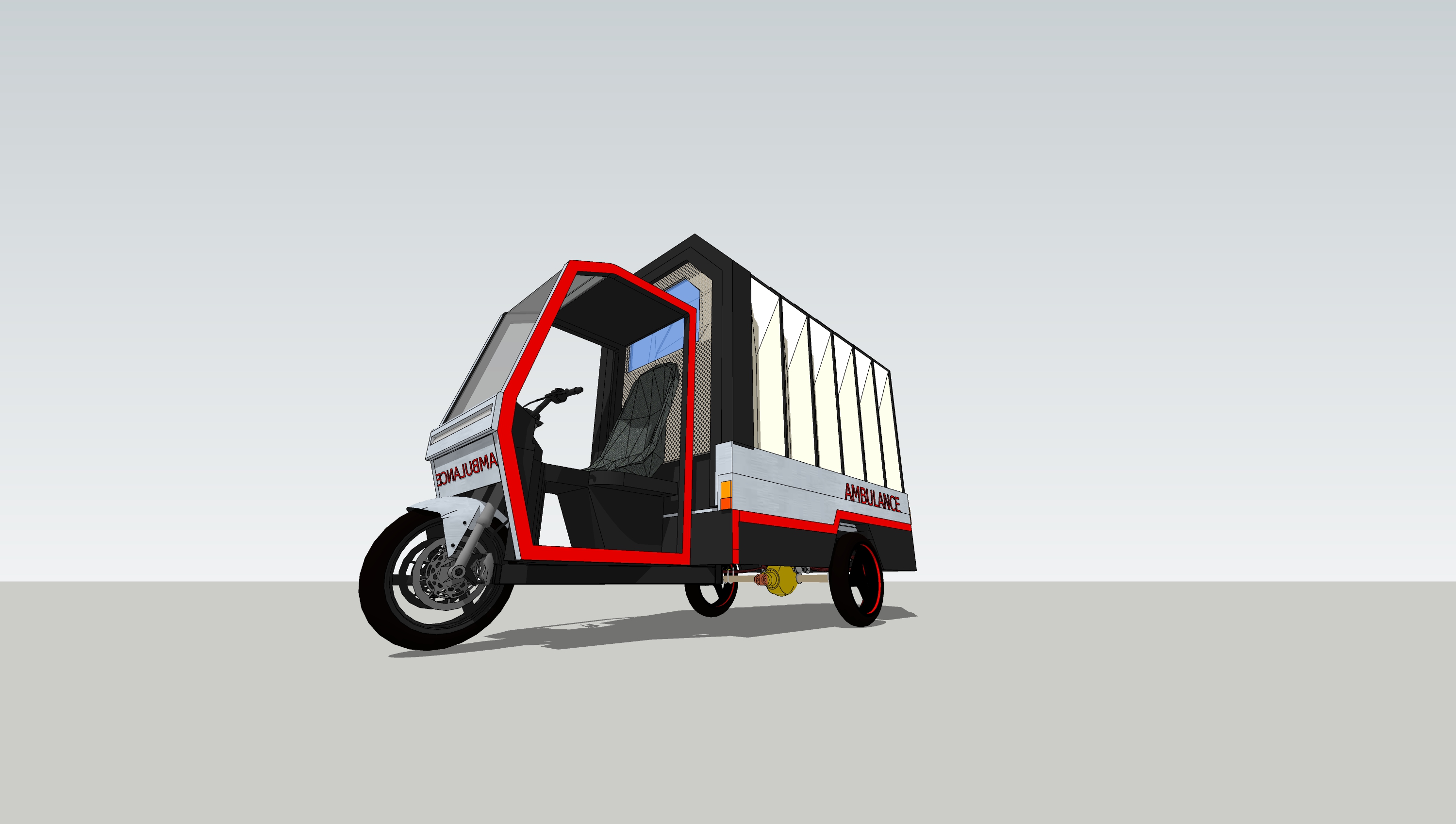
360° Design View
In Puran Dhaka, traffic paralyzes large vans. In rural areas, muddy roads are impassable. Traditional ambulances cost 4-5 Million BDT and are often unavailable.
High Cost: Unbearably high for rural communities.
Limited Access: Cannot enter narrow 6m radius roads.
Incoordination: Fragmented contact numbers, no real-time data.
Decentralized outposts and agile design reduce response times by 20-44%.
Designed in SolidWorks. Simulated in Ansys.
Built by BUET engineers.
Replaces linear chassis with a truss structure for 35% less weight and 80% more load capacity (up to 700kg).
A foldable, origami-inspired hood built with MS bars and waterproof polyurethane. Converts instantly from ambulance to medical cargo van.
300W total capacity generating 1.5-2 kWh/day. Covers 15% of total energy needs, specifically powering medical equipment.
Sodium-ion batteries offer cost-effectiveness, abundant resources, and safety. Comparable performance to LFP with better low-temperature operation.
Witness the intricate mechanisms and 3D modeling behind the Trambulance.
Visuals of the Trambulance in action.
Moving away from hospital-based parking to a decentralized outpost model.
Machine learning algorithms predict traffic patterns in Dhaka to find the fastest route.
Drivers trained in CPR, bleeding control, and oxygen administration (collaboration with BNCC/Red Crescent).
"Trambulance isn't just a vehicle; it's a lifeline for the 99% who cannot access formal ambulance services."